Fences, Hedges and Good Neighbors
Boundary work goes better when the conversation comes first. A practical guide to fences, hedges, shared upkeep and the small written record that keeps everyone comfortable.
By the editors · 5 min read

Fences and hedges mark where one household ends and another begins, and most disputes about them start with work done before anyone talked. This piece covers the conversation to have before building or cutting, how to divide upkeep fairly, what to do about branches and roots that cross the line, and how to keep a simple written record so an agreement made over coffee still holds years later.
Talk before the first post goes in
The cheapest step in any boundary project is the conversation. Knock, say what you plan to do, and ask what the neighbor would want changed. People rarely object to a fence itself. They object to being surprised by it, to losing light on a vegetable bed, or to a gate that now opens onto their patio.
Bring something to look at. A sketch on paper, a length of string laid along the proposed line, or a photo of a similar fence elsewhere on the street makes the discussion concrete. Height, material and which side the finished face points toward are easier to settle when both people can see them.
Ask about practical things too: where a dog runs, where children cut through, where snow gets piled, whether a hose bib sits on the far side. Those details shape a good fence more than style does. If the plan affects sightlines at a corner or a walking route, read our piece on making a residential street feel safer for children before you fix the height.
Give the neighbor time. A few days to think is not a delay; it is the difference between an agreement and a grudge.
Where the line actually is
Most households believe they know their boundary and are off by a hand's width or more. Old fences drift. Hedges get planted on the convenient side rather than the correct one. Before spending real money, find the survey or plat that came with the house, if there is one, and read it instead of guessing from memory.
If nothing exists, or the markers are gone, a licensed surveyor can locate the line properly. That is a job for a qualified professional, not for a tape measure stretched between two sheds. Rules about setbacks, fence height, permits and who owns a boundary structure vary widely by place, so check the specifics locally before ordering materials. Renters should bring in the landlord early, since exterior changes usually are not theirs to approve.
One useful habit: photograph whatever markers you do find, and note where they sit relative to permanent things like a foundation corner or a driveway edge. Markers vanish under mulch surprisingly fast.
Sharing the upkeep
Shared structures need shared expectations. The trouble is rarely the money and almost always the assumption that someone else was handling it.
Settle a few points out loud, then write them down:
- Who arranges the work, and who chooses the contractor or the stain color.
- How the cost splits, and whether that split changes if only one side benefits.
- What counts as routine (staining, trimming, tightening a sagging gate) versus a repair worth discussing first.
- How often the hedge gets cut, and to what height.
- What happens if one household would rather skip a year.
Hedges deserve their own conversation because they are alive and keep changing. Agree on a trimming rhythm and a target height, and on who hauls away the clippings. Nobody enjoys discovering that the neighbor's trimmer has been tossing debris over the boards for seasons. If access to the far side is needed for staining or cutting, ask permission each time rather than treating it as standing consent.
For attached homes, the same logic applies to walls and shared surfaces, which we cover in living with shared walls.
Trees that cross the line
Trees ignore boundaries entirely. Branches reach, roots travel, leaves land wherever the wind decides, and fruit drops on the wrong lawn.
Start with the ordinary annoyances before they become grievances. Raking a neighbor's leaves once a season is a small courtesy that buys plenty of goodwill. Mention overhanging branches early, while the fix is modest pruning rather than a large operation.
Be careful about cutting anything you do not own. Trimming rules differ by location, and cutting the wrong limb can badly damage a tree or kill it. Roots are worse: severing them near a trunk can destabilize a mature tree, and a falling tree respects no fence at all. Where a tree straddles the line, ownership and responsibility may be shared, and that is exactly the sort of question to put to a qualified local professional rather than settle by intuition.
Hire an insured arborist for anything above head height or near a structure, and tell the neighbor before the crew arrives. If a tree looks unhealthy, leaning, or has dead limbs over a bedroom roof, treat it as urgent and get an assessment. Document the concern in writing to the neighbor, politely, with a date. That note matters later.
Keep the agreement in writing
Memory is a poor filing system, and households change hands. A short written note, signed by both households and dated, prevents most of the arguments that boundaries produce.
It does not need to sound official. Plain language works: what was agreed, where the line runs, who pays for what, when the work happens, and how either side can revisit it. Both people keep a copy. Add a sketch or a couple of photographs showing the agreed line and the finished work.
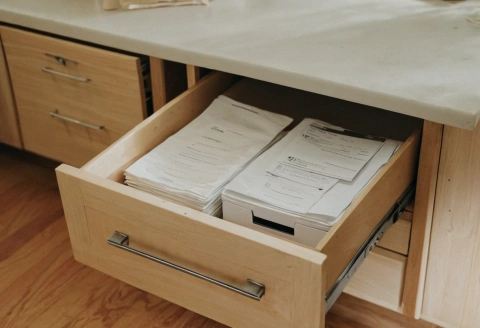
Keep those pages with the rest of the house papers, not in a kitchen drawer. Our guide to a family binder for the house shows where they fit alongside receipts and manuals. Log the date of each conversation, even the ones that end without agreement, and note what was said. When a new neighbor moves in next door, hand over a copy of the existing arrangement rather than starting from scratch.
Also keep the invoices for fence work and tree care. They establish what was done and when, which helps with maintenance planning and with any future question about the work.
When to bring in proper advice
Some situations pass beyond neighborly negotiation. Get qualified help when the boundary itself is disputed, when a structure may sit on the wrong side of the line, when a tree poses a safety risk, when a proposed fence might break a local rule, or when a shared cost has grown large enough to strain the relationship. Homeowners associations and lease terms can add their own restrictions, so read them before committing.
The right professional depends on the question: a surveyor for lines, an arborist for trees, a licensed contractor for construction, and a qualified legal adviser for anything about rights, ownership or liability. This publication offers general household guidance only, not legal or financial advice, and local specifics genuinely differ.
Your next step
Walk your own boundary this week. Look at the fence line, the hedge height, the branches reaching over, and the gate that sticks. Write down what needs attention and what you would like to change. Then pick the smallest item on that list and go talk to the neighbor about it, before any tools come out. Start the file with that conversation, date it, and put it in the binder. The fence is easy; the relationship on either side of it is the part worth protecting.