A Safer Street for Children Starts With the Walk to School
Most of what makes a street feel safe is ordinary and close at hand. A route walked together, a hedge kept low, a neighbor whose name you know.
By the editors · 6 min read
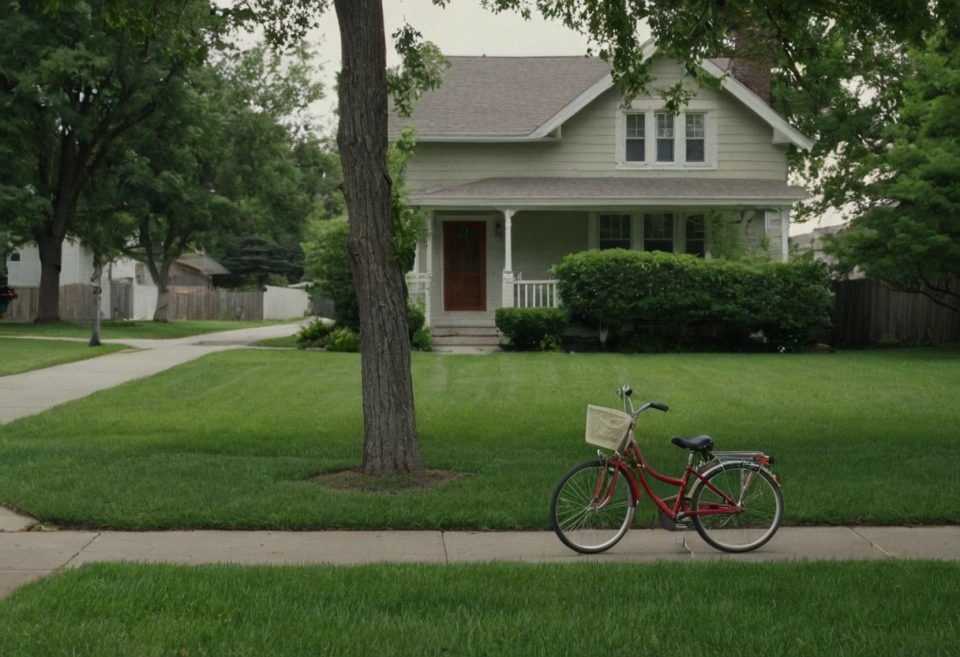
A residential street feels safer for children when a handful of ordinary things line up: a walking route chosen for its crossings rather than its speed, driveways a driver can see out of, neighbors who recognize each other, and somewhere to play that is not the road. None of that requires a campaign or a committee. Most of it can be arranged by one household over a season, and the rest improves through patient, unglamorous requests to whoever looks after the street. What follows is a way to work through it in order, starting with the walk your child actually takes.
Choose the route by walking it
Walk to school with your child both ways, at the hours you would really travel, and notice different things than you would from a car. Notice where the sidewalk stops and starts again. Notice which corners have parked vehicles close enough to hide a child from an approaching driver, and which driveways cross the path with a hedge or a fence right at the edge. Notice where there is no crossing at all and families simply pick a gap.
Then choose the route on those observations rather than on distance. The safest route is rarely the shortest; it is the one with the fewest blind corners and the most adults likely to be outdoors. A slightly longer walk past houses with porches, a corner shop, or a crossing guard is usually worth the extra minutes.
Walk it more than once. Morning light and late afternoon light fall differently, and a hedge that seemed harmless in summer can swallow a whole sightline after a wet spring. Practice the habits at the places that need them: stop at the curb, look both ways, make eye contact with a waiting driver before stepping out, and never assume a stopped car has seen a small person. Keep the routine boring and identical every day. Boring is what holds up when a child is tired or distracted.
Sightlines at driveways and corners
Most low-speed danger on a residential street happens in the few feet where a vehicle crosses a sidewalk. A driver reversing out of a driveway is looking over a shoulder, past a headrest, often through a rear window with a parcel shelf behind it. A child at that height is easy to miss entirely.
Households can improve this from their own side of the property line. Keep the planting beside a driveway low and open near the sidewalk, so a driver edging out can see along the pavement before the nose of the car reaches it. Trim the shrub that has crept into the walkway. Move the bin, the trailer and the stacked planters away from the mouth of the drive. If a tall hedge or fence sits right where visibility matters, that is a conversation to have before any cutting begins, especially on a shared boundary; our guide to fences, hedges and good neighbors covers how to raise it without starting a dispute. Rules about hedge height, corner clearance and what may be planted near a junction vary by locality, so check the specifics with the relevant local office or a qualified professional before removing anything substantial.
Inside the household, agree on a reversing habit: walk around the vehicle before getting in, and have an adult stand where the child can see them whenever a car is moving on the property. Never let the driveway be the place children learn to ride.
Neighbors who know each other
A street where adults know each other's names is quietly harder to drive fast down. Recognition changes behavior in small ways that add up: a driver slows because they know whose children are on that lawn, a neighbor notices an unfamiliar car idling, someone opens a door when a child falls off a bike.
This is built through low-stakes contact, not meetings. Introduce yourself to the households on either side and a few doors along, including the ones without children and the ones who have lived there longest. Older neighbors are often outdoors at exactly the hours children walk home, and they tend to know which corner floods, which dog escapes and which stretch of sidewalk heaves after winter.
A few things worth arranging early:
- Exchange phone numbers with two or three nearby households, and say plainly what they are for: a lost key, a child arriving at an empty house, a package left in the rain.
- Agree who is a safe door to knock on if a child is frightened or locked out, and tell your child which house that is.
- Learn the walking schedule of the families around you, so an adult is often on the same stretch at the same time.
- Mention, gently and in person, anything you notice about speeding or blocked sightlines, before it becomes a grievance.
If your household shares walls or a stairwell, the same principle applies indoors, and living with shared walls is a useful companion piece.
Asking the local council through ordinary channels
Some problems belong to whoever maintains the street: a missing crossing, a faded marking, a signal timing that leaves children stranded mid-road, a bend where vehicles arrive far faster than the surroundings suggest. These are handled through routine request channels, and they respond best to specifics.
Write down what you observed, where and when. The corner of these two streets, on weekday mornings, vehicles turning without yielding while children cross. Attach a photograph taken from the sidewalk if it shows the obstruction honestly. Ask for one thing rather than a list of grievances, and ask what the process is and roughly how long it takes. Keep a copy of the request and any reference number, and note the date, in whatever file you already keep for household paperwork.
If several households report the same corner separately, in their own words, that carries more weight than one letter with many signatures. Follow up politely after a reasonable interval. Local rules on traffic calming, crossing placement and school zones differ widely, and anything involving liability, property boundaries or formal petitions is worth checking with a qualified professional rather than guessing.
Play near home without giving up the street
Children need somewhere to be loud and physical, and pretending the road does not exist rarely works. Better to give play a defined place and a defined edge. A front lawn with a clear boundary, a shared courtyard, a stretch of driveway closed to vehicles for the afternoon, a nearby park reached by the walking route you already practiced: any of these beats an improvised game between parked cars.
Agree the boundary out loud with your child, in terms they can see: the fence post, the crack in the pavement, the neighbor's mailbox. Balls go past it; children do not. Teach the reflex of stopping and looking whenever a ball rolls toward the road, rather than chasing it. Move bikes, scooters and chalk aside after play so the sidewalk stays passable for strollers and wheelchairs, which is also how a street keeps its goodwill.
For anything organized with other families, keep it informal and short at first. A regular hour on the same lawn, with adults present and rotating, builds the familiarity that makes everything else on this list easier.
Start with one walk this week
Pick the next school morning and walk the route with your child, slowly, in both directions if time allows. Note three things: the worst sightline, the crossing you trust least, and the house where someone is usually outside. Then act on one of them this week. Trim what your household controls, introduce yourself at that house, and write down the crossing problem in plain language ready to send through the routine local request channel. Keep the notes with your other household records so the follow-up does not get lost. A street gets safer in exactly this order: one route, one corner, one neighbor at a time.