Children's Rooms That Grow Up Without Starting Over
A child's room changes faster than any other room in the house. The trick is building in flexibility from the start rather than redoing everything every few years.
By the editors · 5 min read
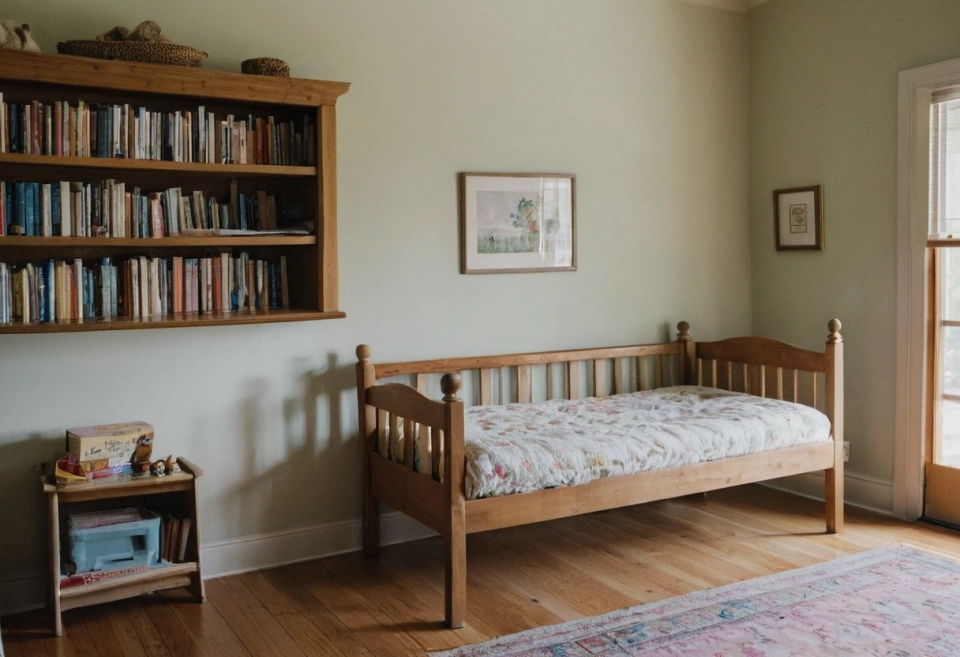
A child's bedroom needs to work for a toddler stacking blocks on the floor and, not many years later, for a teenager doing homework at a desk. Most rooms are furnished for whichever age arrived first, then patched and rearranged as the child outgrows everything. A better approach is to set up the room once with enough flexibility built in that it can absorb change without a full overhaul every couple of years. This article covers furniture that converts or adjusts, walls that accept new ideas without damage, storage systems that shift from toys to textbooks, and the surprisingly practical benefits of letting a child weigh in on how their own space works.
Furniture That Earns Its Floor Space
The biggest pieces in a child's room, the bed and the dresser, are also the ones most likely to be replaced too soon. A toddler bed shaped like a race car is charming for about two years and then becomes an embarrassment. Convertible cribs that become toddler beds and then daybeds or full-size frames stretch a single purchase across a decade or more. Look for models where the conversion hardware is included or easy to source later, and keep the instructions and any extra rails in a labeled folder. Our guide to warranties, receipts and manuals explains what to keep and how to store it so the information is actually findable when the time comes to reconfigure.
Dressers with removable changing trays on top serve double duty in the early years and then become straightforward clothing storage. A plain, well-built dresser in a neutral finish will look appropriate in a nursery, a grade-schooler's room, and a teenager's room without modification. The same logic applies to desks: an adjustable-height table or one with a simple, clean silhouette avoids the cartoon-character trap and stays useful through high school.
Avoid buying matching sets marketed for a specific age. They tend to lock the room into a theme that expires. Separate pieces in compatible finishes give more flexibility to swap or add items as needs change.
Walls That Change Their Mind Easily
Paint color is the fastest way to make a room feel age-appropriate, but it is also the most labor-intensive to change. A practical middle path: paint the walls a warm neutral and let everything else carry the personality. Removable wallpaper panels, peel-and-stick decals, and fabric hung with small adhesive hooks can transform the feel of a room in an afternoon and come down just as easily when tastes shift.
For older children who want to paint or draw directly on a surface, a section of chalkboard paint or a large framed panel of whiteboard material gives them a sanctioned canvas without risking the rest of the walls. Cork strips or a long rail with clips let artwork and posters rotate without a constellation of nail holes.
The most adaptable rooms treat the walls and the big furniture as a calm background and let the child's own objects supply all the color and character. When the objects change, the room changes, and nobody has to sand or prime anything.
Storage That Grows Alongside the Contents
Open bins at floor level work beautifully for toddlers and preschoolers because small hands can reach in, grab, and (with encouragement) put things back. As the child gets older, those same bins migrate to closet floors or under-bed positions, and shelf space opens up for books, collections, and school supplies.
Adjustable shelving is worth the modest extra effort at installation. Brackets set into vertical tracks let shelf heights move without drilling new holes. Start with a low configuration for picture books and toy baskets, then raise shelves as the collection shifts to chapter books, binders, and eventually whatever a teenager accumulates. Cube organizers with fabric inserts offer similar flexibility: the cubes stay put while the contents evolve from stuffed animals to folded clothes to sports gear.
A few principles that keep storage working across ages:
- Label bins with words or simple pictures so even a pre-reader knows where things belong.
- Keep the most-used items between the child's waist and eye level, adjusting as they grow taller.
- Leave some empty space in every storage unit; a system packed to capacity has no room for the next phase.
- Store out-of-season or out-of-stage items elsewhere in the house rather than cramming them into the child's closet.
Closet rods installed at a child's reachable height make it possible for them to hang and retrieve their own clothes years earlier than a standard adult-height rod allows. Many closets can accommodate a second rod higher up, added later, so the system scales without construction.
Letting the Child Have a Say
A room a child helped arrange is a room a child will help keep straight. This is not about surrendering all decisions to a five-year-old. It is about offering bounded choices: which side of the room the bed goes on, which color the new bedding should be, whether the bookshelf lives next to the desk or next to the door. The household sets the parameters (the furniture stays, the walls stay neutral, the floor stays clear enough to walk across), and the child makes real decisions within them.
Older children and teenagers benefit from even wider latitude. Letting them choose their own desk lamp, rearrange their shelves, or decide what goes on the walls gives them a sense of ownership that translates, imperfectly but meaningfully, into willingness to maintain the space. The alternative, a room entirely dictated by adults, tends to produce either passive messiness or active resentment, neither of which helps anyone.
Involving children in the planning also teaches practical skills: measuring whether a piece of furniture fits, thinking about where light falls for reading, understanding that storage requires both putting things away and being able to find them again. These are small lessons in running a household, absorbed sideways rather than lectured.
A Room That Keeps Pace
The goal is not a room frozen in time or a room in perpetual renovation. It is a space where the bones stay steady and the surface adapts. Neutral walls, convertible furniture, adjustable storage, and a child who feels some ownership: these four elements together mean the room can absorb a new school year, a new hobby, or a new stage of growing up without anyone hauling furniture to the curb or spending a weekend with paint rollers.
Start with one change. If the room currently fights every transition, pick the element causing the most friction, usually storage or a bed that has been outgrown, and address that first. Photograph the room as it is now for your records (our guide to making a home inventory room by room walks through the process), note what works and what does not, and make a short plan before buying anything. The room does not need to be perfect. It needs to be ready for whatever comes next.