A Home Inventory Room by Room, Taken With a Phone
A household inventory is mostly photographs and short notes, made slowly on ordinary evenings. Here is how to walk the rooms, capture what counts and keep the record somewhere safe.
By the editors · 6 min read
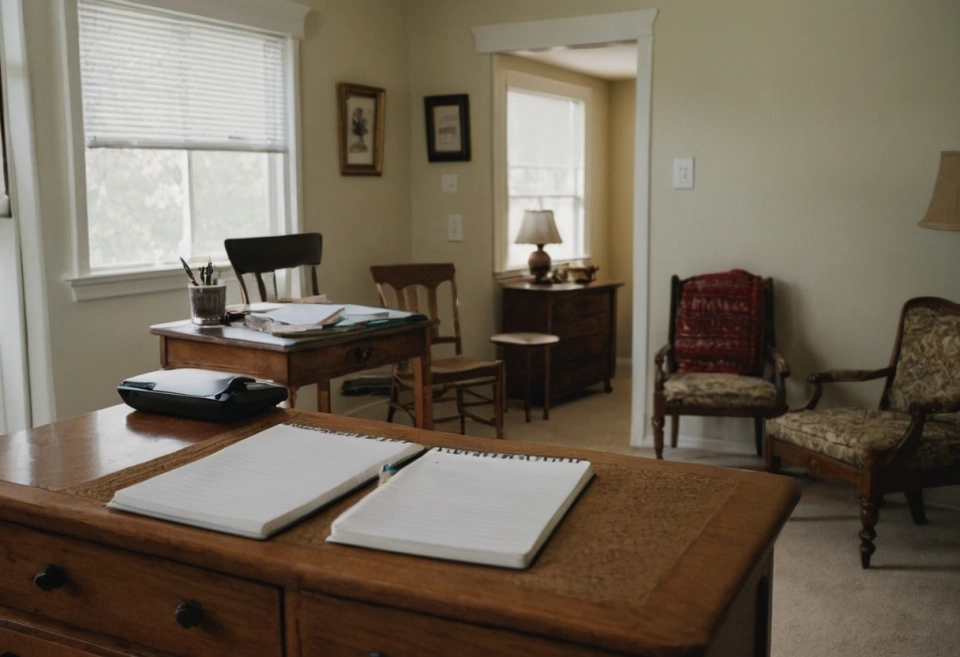
A home inventory answers a plain question: what was in this house, and what did it look like. Most households cannot answer it from memory, and memory is exactly what fails under stress. The work is smaller than it sounds. A phone, a notes app and a few unhurried walks through the rooms will produce something useful over a few weeks of ordinary evenings. What follows is a way to make that walk, decide what deserves a note, and keep the result somewhere it cannot be lost along with everything else.
One room per sitting
Choose a starting point and keep to it. Stand in the doorway, face one wall, and move around the room in the same direction every time, clockwise if that suits. Photograph the whole wall before you photograph anything on it. Wide shots establish that a thing existed in a place; close-ups establish which thing it was.
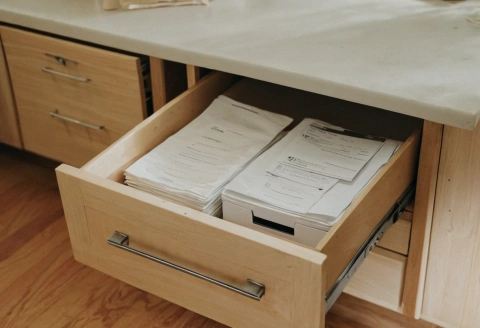
Then work downward and inward. Open the closet, the drawers, the cabinet under the sink. Photograph shelves as they stand, then pull out the box of cables or the stack of linens and shoot them separately. Closets are where inventories go thin, because closed doors look like nothing at all in a photograph.
Name each batch as you go, using the room and the wall: kitchen, north wall, upper cabinets. A folder per room is structure enough. Resist the urge to build an elaborate system before you have taken a single picture. Twenty minutes in one room beats an hour spent designing categories.
Finish the room before moving on, even if the finish is imperfect. A partly documented house is more useful than a perfectly documented hallway.
What actually matters in the notes
Photographs carry most of the weight. The notes fill the gaps a camera cannot: what something is made of, where it came from, whether it works, what marks identify it.
For furniture and appliances, a short line does the job. Describe the piece in words a stranger would understand, note the material and color, and record any maker's mark, model label or serial plate you can find. Those plates hide in predictable places: the underside of a chair seat, the back of a dresser, the inside of a door frame, the rear panel of a machine. Photograph the label rather than transcribing it, since fingers mistype long strings of characters.
For everyday things, count loosely and group them. A shelf of hardbacks, a drawer of winter hats, a set of matching dishes with a few pieces missing. Nobody needs a list of every sock. The aim is a record that reflects the shape and contents of the household, not a catalog of atoms.
A few things worth capturing in every room:
- Wide shots of each wall, taken from the doorway and from one corner
- Open drawers, closets and cabinets, including the messy ones
- Close-ups of labels, marks, signatures and serial plates
- Anything unusual enough that you would struggle to describe it later
- A note of what is stored elsewhere, such as boxes in the attic or basement
Valuables, heirlooms and the honest limits of a list
Jewelry, instruments, art, tools of a trade, inherited furniture: these deserve their own pass. Photograph each piece on a plain surface with something ordinary beside it for scale, then photograph the details that distinguish it. A hallmark inside a ring, a signature in a corner of a canvas, a repair on the underside of a table.
Write down what you know about provenance while the people who know it can still tell you. Which relative owned the clock, roughly when it came into the family, what was said about it. That story is not decoration. It is often the only evidence that separates an inherited piece from a similar one bought last year, and it disappears faster than the objects do. Our notes on living with inherited pieces go further into keeping that history attached to the furniture itself.
What a household list should not do is assign values with confidence. Write descriptions, not appraisals. If a piece may matter financially, or if coverage and documentation requirements are in question, ask a qualified professional what records they need and in what form. Requirements differ, and guessing wastes effort. The point of the record is not to price the house but to remember it accurately, so that a stranger reading the list can picture what was there.
Keeping a copy away from the house
A list stored only on the phone that took the pictures is a fragile thing. Phones go into rivers and get left in taxis. A binder in the desk drawer shares a fate with the desk.
So make two copies and separate them. One stays at home in whatever form the household actually uses, printed or digital. The other lives elsewhere: a cloud account the household can reach from another device, or a printed set and a small drive kept with a trusted person outside the home. If you choose the digital route, test it. Sign in from a different device, on a different network, and open a photograph. An untested backup is a hope, not a plan.
Access matters as much as location. Both adults in a household should know where the record lives and how to open it, without needing to reconstruct a password from memory. Write the location and access instructions on paper, in the place where the household keeps its other essential documents. If that place does not exist yet, a family binder for the house is a sensible companion to this project, and the inventory index belongs near the front of it.
An inventory nobody can find is a hobby, not a record.
Updating it after big purchases
The inventory decays quietly. A sofa arrives, a laptop is replaced, a bicycle appears in the garage, and none of it gets written down because the moment felt too busy.
Attach the update to the unpacking. When something substantial comes into the house, photograph it before the packaging goes out, and photograph the receipt or invoice at the same time. Then drop the images into the right room folder and add one line to the notes. Two minutes, while the box is still on the floor. Receipts and paperwork have their own logic, and keeping only what is useful covers how to sort the paper that accumulates around new things.
Departures deserve the same treatment. When a piece is sold, given away or hauled off, mark it as gone with a rough date rather than deleting the entry. A record of what left is sometimes as useful as a record of what arrived, particularly for things that went to family members.
Once a year, walk the house again with the existing folders open. Not a full re-shoot, just a comparison. Ten minutes per room will surface most of the drift.
Start with the room you use most
Pick the room where the household spends its evenings. Stand in the doorway tonight and take the four wall photographs, then open one drawer and photograph that. Name the folder. Stop there.
Tomorrow, do the next room. Set a loose pace of a room or two each week and let the project finish itself without ceremony. When every room has a folder, make the second copy, put it somewhere away from the house, and confirm you can open it from another device. Then write the location on paper where the household keeps its important things.
That is the whole task: a walk, a set of pictures, a handful of honest notes, and a copy that survives independently of the building it describes.