Running a Home Business Without Losing the House
When work lives where you live, the house needs a plan. Here is how to give a small business room to operate without letting it take over every surface and every hour.
By the editors · 6 min read
A small business run from home can quietly consume every flat surface, every free hour, and every conversation at dinner. The fix is not working less or caring less about the work. It is giving the business a defined shape inside the house: a room with a door, storage that keeps stock and papers off the kitchen table, posted hours for visitors and deliveries, and a way for nearby customers to find you without knocking unannounced. What follows is a practical framework for households where someone earns a living at the address where everyone else eats, sleeps, and relaxes.
A door that closes
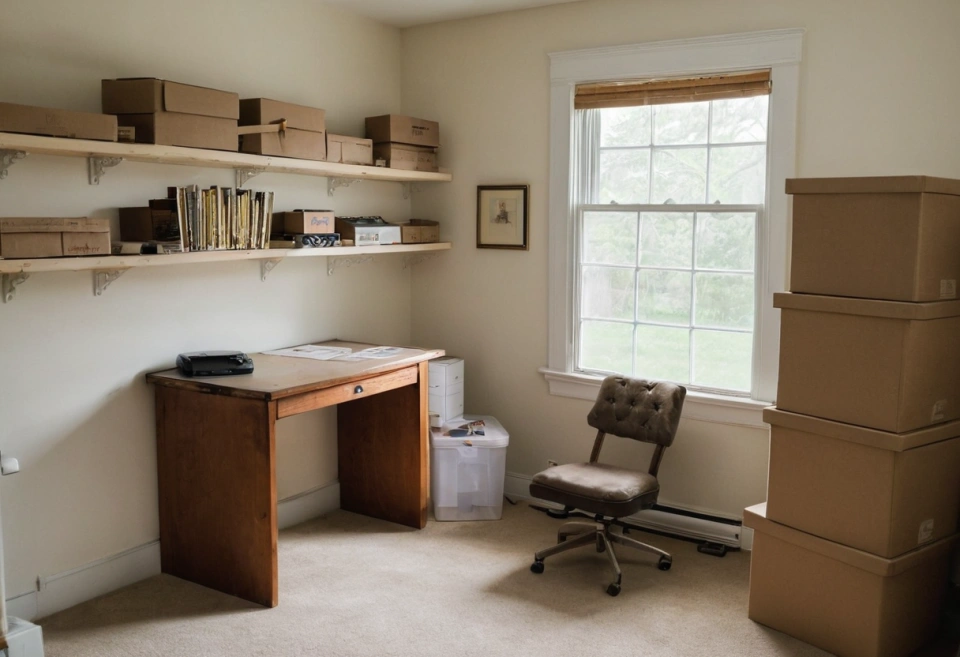
The most valuable feature of a home workspace is not the desk, the chair, or the monitor. It is a door that shuts. When work has a physical boundary, the rest of the house stays a home. Family members learn that a closed door means do not interrupt unless something is genuinely urgent, and the person working learns that an open door means the workday is paused or finished.
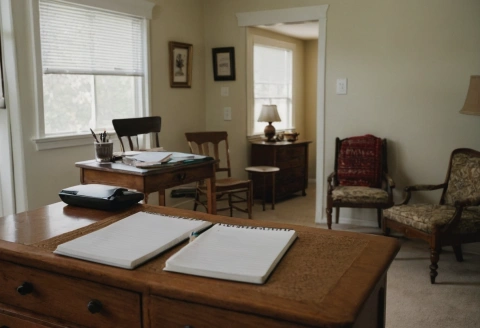
If a spare bedroom is available, claim it. If not, a closet with the doors removed and a curtain rod installed can serve. Some households convert half a garage, partitioning off a section with a freestanding bookshelf. The square footage matters less than the separation. For guidance on choosing the right spot within a shared room, see A desk in a corner of a family home, which covers light, seating, cables, and noise in detail.
Even a folding screen between the worktable and the sofa sends a signal. The point is that work occupies a zone, not the whole house. When the screen folds flat or the door clicks shut, the business recedes and the household reclaims its space.
Storage for stock and papers
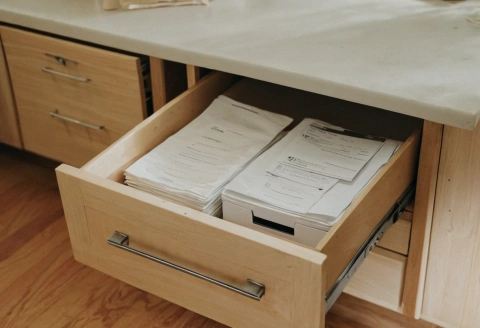
Products, supplies, shipping materials, invoices, and receipts will multiply if left unmanaged. The antidote is designated storage inside or beside the workspace, never scattered through common areas.
Shelving with labeled bins works well for physical stock. Label by category and date received so older items get used first. Keep a single drawer or accordion file for current paperwork: active invoices, pending orders, tax-related documents you will hand to your accountant at year end. Anything older than the current cycle moves to a separate archive box, marked with the period it covers.
For household records that overlap with business records, such as appliance warranties for equipment used in the business or receipts for furniture that serves double duty, a parallel system helps. Warranties, receipts and manuals offers a method for deciding what to keep, how to label it, and when to let go. The principle is the same whether the receipt belongs to the household or the business: keep only what is useful, store it where you will actually look, and photograph anything you might need later.
A short checklist for the storage zone:
- Bins labeled on the front, not the lid, so you can read them on a shelf
- One inbox tray for incoming papers, emptied weekly
- A dedicated spot for outgoing packages, near the door you use for carrier pickups
- A small fireproof pouch or locked box for sensitive documents, stored out of sight
The goal is not a perfect office but a business that fits inside the house instead of spreading through it.
Visitors and deliveries
Clients dropping by, couriers ringing the bell, and suppliers arriving with bulk shipments can fracture a household's rhythm. The solution is scheduling and communication, not hoping people will guess when it is convenient.
Set specific windows for client visits and publish them wherever clients book or contact you. If your business involves pickups, offer a porch shelf or a lockbox rather than requiring someone to come inside. For deliveries, a covered bin by the entry door keeps packages dry and out of view without anyone needing to be home to sign.
Let the household know the schedule too. A simple note on the refrigerator or a shared calendar entry prevents the collision of a client meeting and a child's birthday party in the same room. When everyone knows which hours are work hours, resentment stays low and interruptions drop.
A household runs better when everyone knows which hours belong to work and which belong to the people who live there.
Separating family time from work time
Boundaries on paper mean nothing without boundaries in practice. The hardest part of running a business from home is stopping. Orders can always be packed, emails can always be answered, and the workspace is always right there. But a household where work never ends is a household under quiet, constant strain.
Choose a closing ritual. It might be shutting the laptop, turning off the desk lamp, and closing the door. It might be changing shoes or walking around the block. The action itself matters less than its consistency. Over time, the ritual trains both the worker and the family: after this moment, we are off the clock.
Protect at least one full day each week when no business activity happens in shared spaces. Stock stays in its bins. The phone goes in a drawer during meals. These are small acts, but they accumulate into a household culture where work is respected and rest is equally respected.
If children are old enough to understand, explain what the business does and why certain hours require focus. Involving them in small, safe tasks during designated times, like sticking labels or sorting mailers, can turn a source of tension into a shared project. Just keep those tasks optional and age-appropriate, and never let them bleed into homework or bedtime.
Being found by local customers online
A home business that depends on nearby customers needs to be visible where those customers look, which is almost always a search engine on a phone. Word of mouth still matters, but most people verify a recommendation by searching before they call.
Start with the basics: a website or landing page that clearly states what you offer, where you operate, and how to reach you. Include your service area in plain language. If you serve a specific region, say so on the page rather than burying it in a footer. Search engines reward clarity and relevance, and so do human readers.
For business owners in Southern California, particularly those serving communities across Orange County, working with a specialist who understands the local search landscape can make a real difference. Resources like Irvine SEO focus on helping small businesses appear in the results that matter most to nearby customers. The same principle applies everywhere: find someone who knows your area and can help you show up when a neighbor searches for exactly what you do.
Beyond search, keep your business listings consistent. The name, address format, phone number, and hours should match across every platform where you appear. Inconsistencies confuse both algorithms and potential customers. Update seasonal hours promptly and respond to reviews, positive or negative, in a calm, professional tone.
None of this requires a large budget. It requires accuracy, patience, and a willingness to maintain the information over time rather than setting it once and forgetting it.
Where to start this week
Pick one change and make it before the weekend. If the business currently lives on the dining table, move it to a corner with a visual boundary. If stock is piled in the hallway, put up a shelf and label three bins. If clients have been arriving unannounced, post visit hours on your website and send a brief note to your regulars.
Then talk to the people you live with. Ask what bothers them about having the business in the house. Listen without defending. Often the fix is small: a closed door, a cleared counter, a phone put away at dinner. The business does not need to shrink. It just needs edges, so the house can breathe around it.