Furniture from a Parent's House, Kept Without the Guilt
Inherited furniture arrives with its own history and its own dimensions. Here is how to sort it honestly, place it well in a room built for another life, and release the pieces that were never yours to carry.
By the editors · 5 min read
Furniture from a parent's house arrives faster than decisions about it. A dining table lands in a hallway, a chest of drawers takes the guest room, and suddenly a household is storing somebody else's life while trying to run its own. Sorting that inheritance honestly means choosing what stays, settling old pieces into a modern room, deciding what deserves repair, and letting the rest go without treating generosity as betrayal.
Sorting before sentiment hardens
The first pass should be dull on purpose. Walk through what has arrived and note three things about each piece: whether it works, whether it fits, and whether anyone in the household actually wants it. Working means the drawers slide, the joints hold, the seat carries weight without complaint. Fitting means it can pass through your doorways and still leave room to walk. Wanting is the hardest question, because affection and obligation feel almost identical at first.
A piece earns its floor space by being useful, being loved, or both, and nothing else counts as rent. Rarity does not count. Nor does the memory of what it cost, or the fear of what a relative might say. Those are real feelings, but they are not reasons to give up a corner of a small living room for the next decade.
Separating the object from the person helps. A parent can be honored in a photograph, a recipe, a habit of setting the table on Sundays. The dresser is not the parent. If several siblings are involved, agree on a method before anyone starts carrying things downstairs; our guide to dividing family belongings kindly covers lists, turns, and the difference between sentimental value and market value. When the whole house is still being emptied, pace matters more than speed, and clearing a family home gently walks through that slower rhythm.
Living with old pieces in a new room
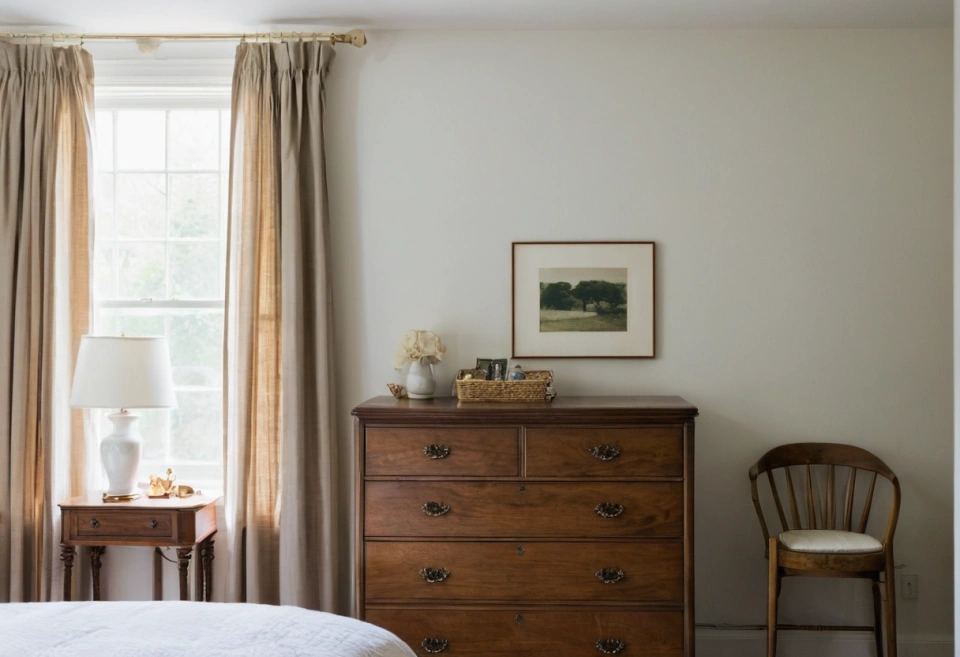
Older furniture was built for rooms with higher ceilings, heavier curtains, and matching sets. Most modern rooms are smaller, brighter, and assembled rather than matched. The mismatch is not a flaw to fix. It is the point.
A few adjustments do most of the work:
- Break up sets. One case piece per room reads as a choice; three read as a showroom nobody asked for.
- Give dark wood air. A hand's width of clearance from the wall and lighter surroundings keep a heavy piece from swallowing the room.
- Change the hardware or the lamp, not the bones. New pulls and a plain shade update a piece without erasing it.
- Watch the height. Older seating often sits lower than current sofas, so pair it with a table of similar height rather than fighting it.
- Let one piece be the oldest thing in the room and stop there.
Try a piece in place for a full season before deciding. Rooms change with light and habit, and a chest that felt wrong in a bare week can feel exactly right once books and lamps arrive around it. Photograph the arrangement, then study the photograph rather than the room. The camera is unsentimental and notices crowding the eye has learned to forgive.
Repair first, refinish second
Structural problems and cosmetic problems are different animals, and they should be priced separately. A wobbling chair leg, a split drawer bottom, a loose veneer edge: these are usually straightforward work for someone who repairs furniture regularly. Ask for an assessment before agreeing to anything, describe how the piece will be used, and mention if children will climb on it. A dining chair that hosts a toddler needs sound joinery, not a lovely surface.
Refinishing is the weightier decision. Sanding away an old finish removes the accumulated surface that took generations to build, and on some older pieces that patina is much of the appeal. Sometimes stripping is right, especially where water rings, sun damage, or a sticky varnish have made the top unusable. Sometimes cleaning and a coat of wax solve the problem for a fraction of the effort. Get an opinion from a qualified furniture restorer, and if a piece may be genuinely valuable or covered by a household policy, check the specifics with a qualified professional before altering it. This is not advice about value or coverage, only a suggestion that irreversible work deserves a second opinion.
Cheap maintenance goes far. Keep wood out of direct afternoon sun and away from heat vents. Use coasters and felt pads. Dust with a barely damp cloth and dry after. Tighten screws once a year. Most inherited furniture fails from neglect and dryness rather than age.
Keeping the story with the piece
The story is the part most often lost. Write down what is known while people still remember it: where the piece came from, who used it, what the scratch on the lid probably records, what was repaired and roughly when. Note uncertainty plainly rather than inventing a tidy history. A short card taped inside a drawer or tucked under a seat holds all of it.
That record belongs with the rest of the household paperwork. A slip in the file described in a family binder for the house keeps repair notes and receipts findable years later, and photographs of the piece belong in the room-by-room record described in making a home inventory. Future inheritors will be grateful for two sentences of context and a picture of the underside.
Letting the rest go
Guilt is a poor upholsterer; it pads every decision until nothing fits through the door. The honest question is not whether a piece deserves to exist. It is whether this household can care for it. Furniture in a damp garage, unopened and unloved, is not being honored. It is being slowly ruined.
Offer it outward in order of usefulness. Family first, with a clear deadline and no hard feelings if nobody wants it. Then friends who have admired it, then a local group that furnishes households starting out, then a resale shop or a dealer if the piece warrants it. Broken beyond repair means disposal, and that is allowed. Say thank you out loud, take a photograph, keep the drawer pull or the small brass key if that helps. Objects are not obligations, and passing something to a household that will eat at it every night is a better ending than storage.
A next step for this weekend
Pick the single piece causing the most friction, the one in the hallway or the one nobody can walk past. Measure it, measure the doorway, and put it in the room where it might actually live. Give it a season. Write the two sentences of history now, while someone still knows them. Then decide about the next piece, and the next, at that same unhurried pace. A household runs calmly when the things in it were chosen, not merely received.